In short
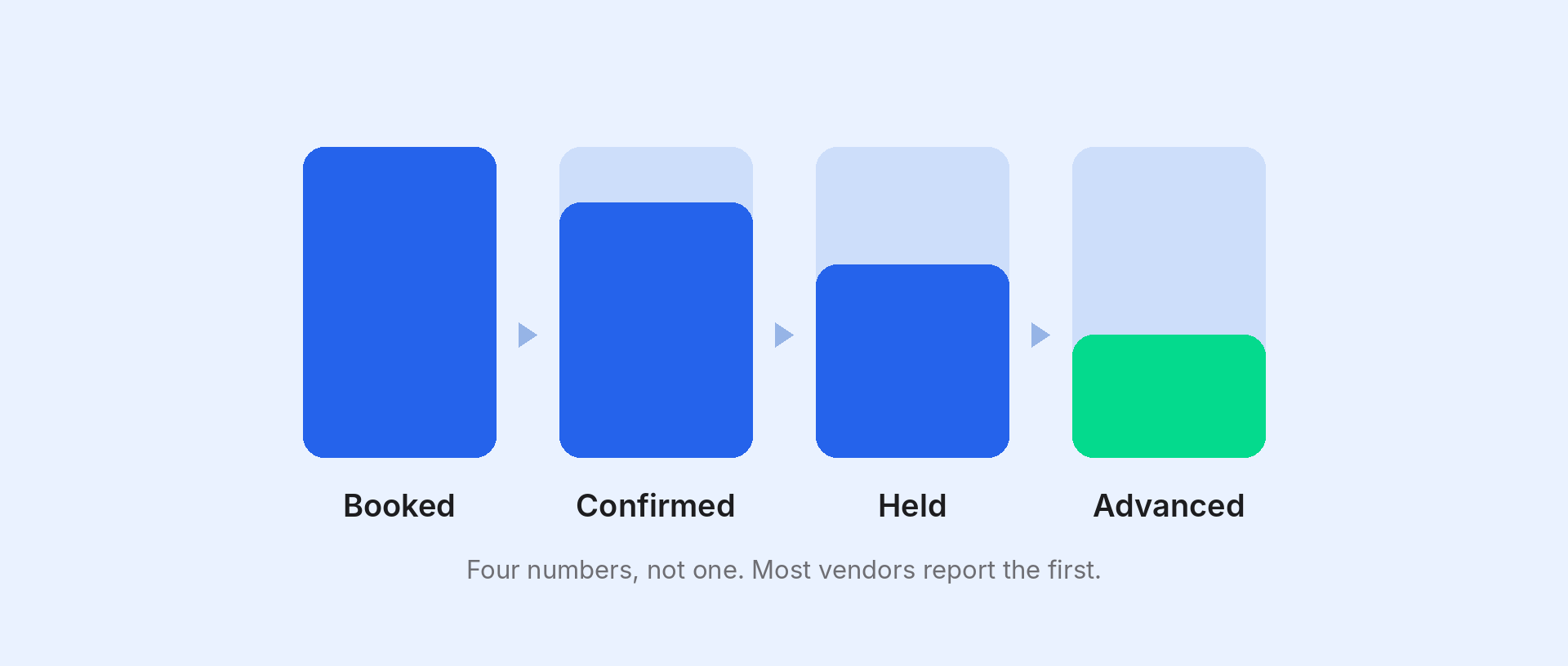
- Vendors count "qualified meetings" differently, and most contracts never say how.
- Four things decide what you actually get: who counts as the right person, what counts as interest, what counts as confirmed, and who owns a no-show.
- Meetings come from conversations, not from dials. The list matters more than the activity number.
- Get the rejection terms in writing: grounds, window, share, remedy.
- Compare the pricing model before you compare the price. It decides what the vendor is paid to optimize.
Two vendors quote you the same number. Twenty meetings a month, both of them. You sign with one. Ninety days later your calendar is full of conversations that went nowhere, and your sales team has stopped opening the invites.
Nothing was misrepresented. The vendor booked twenty meetings. They were meetings by the definition in the contract — and the contract had no definition.
You will negotiate the price. You will negotiate which channels the rep uses. Almost nobody negotiates the word qualified. That word is what decides what lands on your calendar every month, for as long as the agreement runs. You argue the price once. The definition works every month.
What B2B appointment setting actually is
A sales development rep works your market. They build the target list from your ideal customer profile, research the accounts, and open conversations by phone, email and LinkedIn. They qualify whoever responds. The ones who clear your bar get booked onto your closers' calendars. Your own team keeps the selling.
Three things sit close together here, and vendors use the terms loosely:
Lead generation hands you contacts and interest signals. You still have to turn those into conversations.
Appointment setting hands you a calendar slot with a named person who agreed to talk and answered your qualifying questions.
Full-cycle sales development is the same rep carrying the deal past the first meeting. Different role, different person.
If you need someone to run the first conversation as well as book it, appointment setting is the wrong line item. RemoteReps' appointment setting covers the booking. The sales closers service covers the call itself.
Where a monthly meeting number comes from
Before you argue about whether twenty meetings a month is good, look at what produces it.
RemoteReps publishes the activity floor and the conversion rate behind its own programs:
At least 100 dials a day, typically 120 to 200
3-5% contact-to-meeting rate
20+ qualified meetings per rep per month
82% average show rate on meetings set
Look closely at the 3-5%. It is a contact-to-meeting rate, not a dial-to-meeting rate. Most dials never become conversations. That is true of every outbound program ever run.
So the number that drives your monthly total is not how many times the rep picked up the phone. It is how many real conversations those dials produced, and how many of those cleared your bar.
Two things follow from that.
Ask for a published activity floor. Most vendors will not give you one. A commitment like a hundred dials a day tells you the rep is still working your list in week three. A meeting target on its own does not tell you that. Read the two together.
A better list beats a bigger dial count. Meetings come from conversations, so the lever with the most room in it is which numbers get dialed at all. That is why the ICP conversation at the start of a program deserves more time than it usually gets. A vendor who wants a week on your list before launching is doing you a favor, not stalling.
Four definitions to put in writing
These are the four places where the word qualified does real work. Write each one in language a stranger could check.
| What to define | Write this | Not this |
|---|---|---|
| The right person | Director or above, in Ops or Finance, US company, 50-500 staff, plus a named exclusion list | "Decision maker", "senior stakeholder" |
| Interest | The three or four qualifying questions, and which answers clear the bar | "Interested", "warm lead" |
| A confirmed meeting | Who confirms, what the confirmation says, what happens if the prospect never replies | "Confirmed" |
| A no-show | Who rebooks, how fast, how many attempts, whether it still counts | Nothing at all |
Who counts as the right person
"Decision maker" is not a definition. It means whatever the person using it needs it to mean at the end of a slow month.
A definition that works reads like a filter someone else could apply without asking you:
Director level or above, in Operations or Finance, at a US company with 50 to 500 employees, in these industries, excluding these named accounts.
Every element there is checkable against a LinkedIn profile or a company record. "Senior stakeholder" is not.
Add a named exclusion list: current customers, open opportunities, competitors, and anyone your team is already working. The fastest way to lose your sales team's trust in an appointment setting program is to book them a meeting with an account they already own.
What counts as interest
Agreeing to a calendar invite is not interest. It is often the fastest way for a busy person to end a phone call.
Interest has to be evidenced, and the evidence is the answers to your qualifying questions. So write the questions, not the adjective. Three or four are usually enough:
- What are you using today for this?
- What made you willing to take this call?
- Who else would be involved if you moved on it?
- Is there a timeframe, or is this exploratory?
A meeting qualifies when the prospect has answered them and the answers clear your bar.
How high to set that bar is a real choice. Require approved budget and a signed timeline and you will book very few meetings. Book anyone who did not hang up and your closers will stop attending.
The workable version sits in the middle: a stated problem your product addresses, the right person or clear access to them, and a reason this is happening now rather than next year. There is more on building that bar in how to qualify sales leads.
What counts as a confirmed meeting
An invite the rep sent and a meeting the prospect confirmed are two different events. Plenty of agreements treat them as one.
Specify the steps:
- Who sends the written confirmation, and what it contains
- Whether a reminder goes out before the meeting
- What happens when the prospect never replies to the first confirmation: does it still count, is it rebooked, or is it dropped?
Specify when a meeting enters the month's count, too: the month it was set, or the month it is scheduled for. That sounds like bookkeeping. It stops sounding like bookkeeping in the last week of a quarter.
Who owns the no-show
Some confirmed meetings will not happen. That is normal, and on its own it is not a quality signal. What matters is what happens next, and that is a question of ownership.
Write down four things:
- Who contacts the prospect after a no-show, and how fast
- How many rebooking attempts before the meeting is written off
- Whether a no-show counts toward the monthly number
- Whether a rebooked meeting counts once or twice
That last one has defensible answers either way. What is not defensible is leaving it unspecified. Then it counts twice in the vendor's report and once in yours.
Ask what the vendor's show rate is, and what sits behind it. A show rate is produced by process, not by luck: written confirmation when the slot is set, a reminder before the meeting, same-day follow-up when someone misses. RemoteReps publishes an average show rate of 82% on meetings it sets, and it confirms every booked slot in writing and again before the meeting. A vendor that quotes a number but cannot describe the confirmation steps behind it is quoting an outcome it does not control.
Rejection: ask, do not assume
Every appointment setting agreement should say what happens when a meeting does not clear the bar. Many say nothing, which puts the whole quality question on trust.
Get four things in writing. Ask them as questions, because the answers vary widely between vendors:
- On what grounds can a meeting be rejected?
- How long after the meeting?
- Up to what share of the monthly total?
- Is a rejected meeting replaced, credited, or neither?
Replacement is the answer that keeps both sides pointed at the same outcome. A vendor who has never been asked these questions is a vendor whose quality has never been tested.
What a good handoff note contains
The definitions settle what gets booked. The handoff note settles whether your closer can do anything with it.
A meeting arrives on a closer's calendar as a name, a company and a thirty-minute block. Everything the rep learned in the conversation either travels with the invite or evaporates.
Specify the fields, and specify that the meeting does not count without them:
- Who the prospect is, their role, and how the company fits the ICP
- The problem they described, in their own words
- Their answers to each qualifying question
- What they are using today, and what is wrong with it
- Who else would be involved in a decision
- Anything they asked that your closer should be ready for
- Which sequence, channel and touch produced the conversation
That last field costs nothing. After a few months it is the only way to see which channel produces meetings that advance, rather than meetings that merely get booked.
Then agree on where the note lives. A note in the vendor's own system, behind a login your closer does not use, is a note your closer will not read. It belongs in your CRM, attached to the record, before the invite goes out.
One test worth running during the sales process: ask to see a real, redacted handoff note from an existing client.
How the pricing model changes what you get
Three models dominate. Each one points the vendor's incentives in a different direction. None of them is dishonest. They are just different.
Per meeting. Cost tracks output, and the vendor carries the risk of a slow month. The incentive is volume, which puts quiet downward pressure on the qualification bar. Not through bad faith — the thing that gets paid for is the thing that gets optimized. Under this model, your definitions and your rejection terms are not paperwork. They are the control system.
Per rep, flat monthly fee. You pay for a dedicated person's time whatever the output, so the vendor gains nothing from a weak meeting and everything from a renewal. Press on what happens if the rep is not the right one: how fast new candidates appear, and at whose cost. Check what the fee includes, too. Recruiting, training, management and tooling are sometimes billed separately and sometimes not.
Hourly or per activity. Neither quality nor meeting volume is incentivized. You are buying capacity and supplying the management yourself. That works if you have a sales leader with time to run the program. It does not if you do not.
Compare the model before you compare the price. Two vendors at the same monthly cost under different models are not selling you the same thing.
What goes wrong after month three
Programs rarely fail at launch. They fail quietly in the second quarter, usually for one of three reasons.
The bar drifts. Nobody decides to lower it. A borderline meeting gets booked in a slow week and nobody rejects it. The next one is easier. Three months later, the definition in the contract and the definition in practice have come apart. Review a sample of booked meetings against the written definition every month, with someone from your side in the room.
The list runs out. A tightly defined ICP in a mid-sized market is a finite number of accounts, and a full-time outbound program works through it faster than most people expect. Once it is exhausted, the rep either recycles accounts or stretches the definition. The second is harder to spot. Agree in advance on what happens: wider geography, wider segment, a second persona, or a lower monthly number. A vendor who raises this before you do has run a program past its first list.
The rep changes. What matters is whether the program survives it. Do the scripts, objection handles and account notes belong to you, or to the individual? Ask what the handover looks like before you need it.
A standing monthly review covering those three takes an hour and catches all of them early. It is also the first thing dropped when the program is going well.
Running this in-house or outsourcing it changes who enforces the bar, not what the bar is. Outsourced SDR versus in-house works through that trade-off, and what to measure either way is covered in SDR metrics.
Questions to ask before you sign
- Show me your definition of a qualified meeting, in writing, from an existing client agreement.
- What must the rep capture on every booking, and can I see a sample handoff note?
- Is the rep dedicated to my account, or shared across clients?
- What activity do you commit to, and is that a floor or an average?
- What is your show rate, and what are the confirmation steps behind it?
- Who rebooks a no-show, how fast, and how many attempts before it is written off?
- On what grounds can I reject a meeting, within what window, up to what share, and what replaces it?
- Under your pricing model, what happens to your revenue if you book me a weak meeting?
- What is your notice period, and what happens to the list, the scripts and the CRM records when we stop?
The last one catches more people than it should. A researched list, a tested script and a CRM full of annotated accounts are worth something. Whether you keep them is a clause, not a courtesy.
Powered by people, boosted by AI
Turn this playbook into booked meetings
Talk to a strategist and walk away with a tailored pipeline plan. Dedicated, managed reps, live in 1-2 weeks.